
Transport‑Oriented Density: How Mixed‑Use Urbanism Is Reshaping Global Cities
Peter Brannan, Managing Director, Asia and Middle East
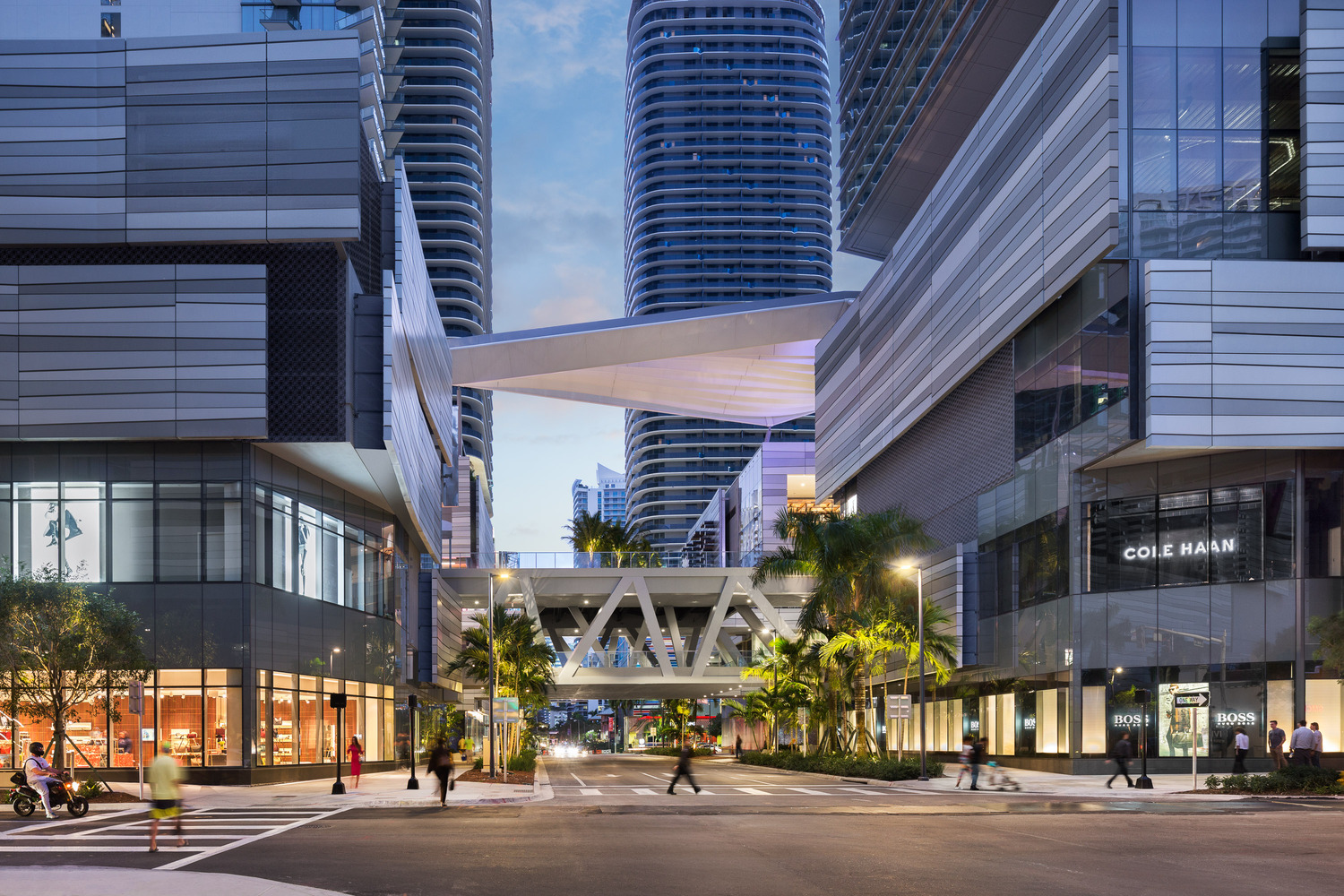
Brickell City Centre, Miami
As cities confront accelerating urbanisation, climate pressure, and infrastructure constraints, transport‑oriented development (TOD) has become a defining framework for sustainable growth. Yet proximity to transit alone does not guarantee urban success. The real challenge—and opportunity—lies in how density, mobility, and mixed use are integrated to create places that perform economically, socially, and environmentally over time.
Across global markets, Arquitectonica’s work in large‑scale mixed‑use development demonstrates a consistent evolution from transport‑adjacent projects to genuinely transport‑oriented urban districts, where transit infrastructure is not a backdrop but a structuring force for urban life.
From Infrastructure to Urban Framework
Effective TOD requires more than stacking programs near stations. It demands a deliberate alignment of vertical density, pedestrian systems, and public space with transport networks. In this sense, mixed‑use development becomes a form of urban infrastructure—absorbing movement, supporting intensity, and enabling long‑term adaptability.
This approach is evident across Arquitectonica’s portfolio, where projects are conceived as extensions of the city, not standalone real estate assets.

GDH BCC, Guangzhou China
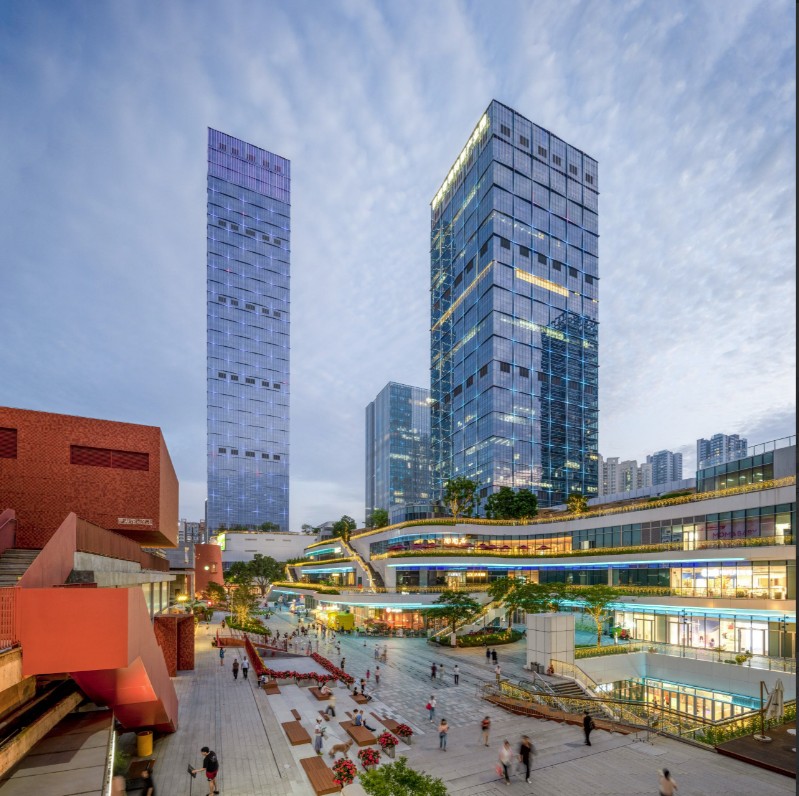
GDH City, Shenzhen
GDH City, Shenzhen: TOD as Urban Regeneration
At GDH City in Shenzhen, a former industrial brewery site has been redeveloped into a 522,000sqm mixed‑use district with direct metro connectivity. The project demonstrates how TOD can function as a regenerative urban tool, transforming underutilised land into a dense, transit‑served employment and lifestyle hub.
Here, transit access enables a vertical mix of office, retail, residential, and cultural uses, reducing trip lengths while supporting continuous activity. The result is not simply higher density, but more efficient urban metabolism—a critical consideration for mature, infrastructure‑constrained cities.
Zhujiang Plaza (GDH BCC), Guangzhou: Connectivity as Value Creation
Located in Guangzhou’s Zhujiang New Town, Zhujiang Plaza / GDH BCC integrates Grade‑A offices, open‑air retail, and residential components with seamless access to the metro. The project’s distinguishing feature is its emphasis on pedestrian continuity across levels, using elevated walkways, landscaped ribbons, and porous podiums to extend the public realm.
Rather than internalising circulation, the development reinforces citywide connectivity, demonstrating how TOD can enhance both urban legibility and commercial performance at key transport junctions.
Festival Walk, Hong Kong: A Precedent That Endures
Completed in 1998, Festival Walk remains one of the region’s most instructive TOD precedents. Built directly above the interchange of two major MTR lines and incorporating a major bus terminal, the project integrates retail, offices, and civic connections into a single intermodal node.
Its enduring relevance lies in its clarity of organisation: vertical stacking aligned with transport flows, generous internal public space, and seamless interchange between modes. Festival Walk underscores a critical lesson for contemporary TOD—long‑term adaptability is as important as initial intensity.
Taikoo Hui, Guangzhou: Balancing Vertical Density with Urban Amenity
Taikoo Hui exemplifies how extreme density can be reconciled with urban comfort. With two direct subway connections, the 450,000sqm mixed‑use development integrates offices, retail, hotel, and cultural facilities within a highly constrained central site.
Multi‑level public spaces, landscaped podiums, and green roofs play a crucial role, effectively redistributing open space vertically while separating vehicles below grade. The project demonstrates how TOD can support high‑rise, high‑value urbanism without eroding the pedestrian experience.
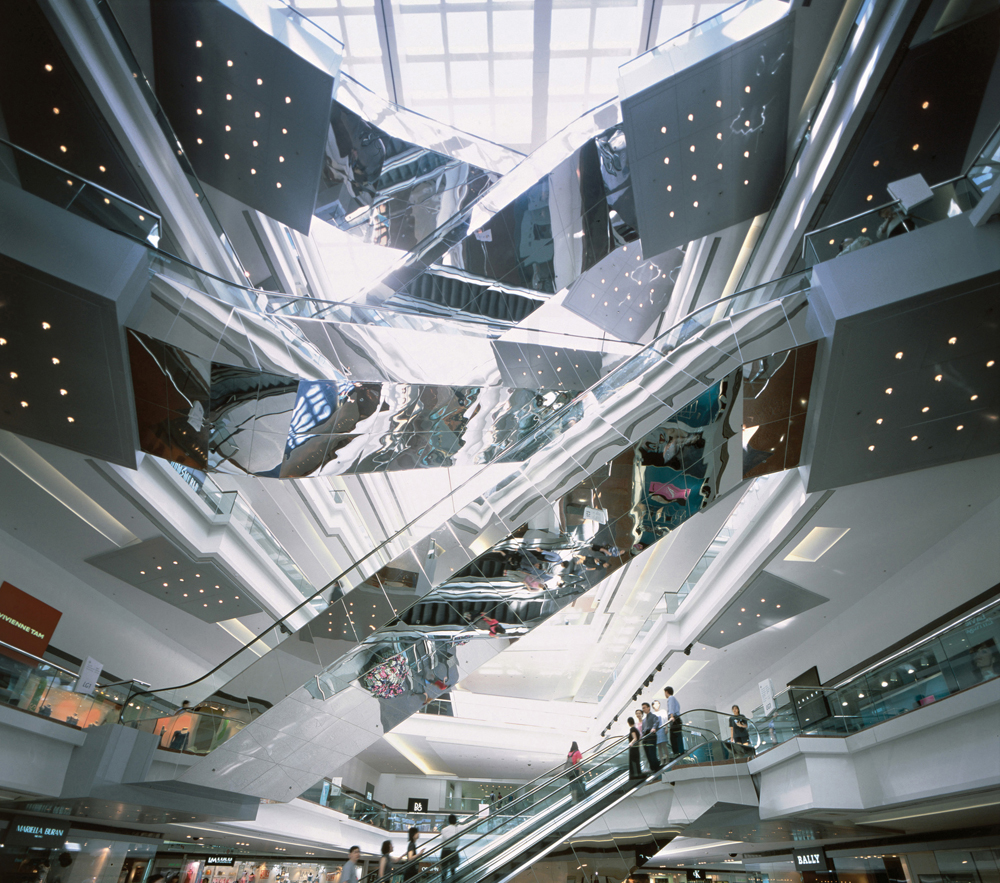
Festival Walk , Hong Kong
Toward the Next Phase of TOD
As cities grapple with new mobility technologies, climate adaptation, and evolving work patterns, TOD must continue to mature. The next generation will be defined less by proximity metrics and more by how effectively density, movement, and public life are integrated vertically.
Arquitectonica’s global experience suggests that when architecture, planning, and transportation are conceived together from the outset, TOD becomes more than a planning strategy—it becomes a platform for sustainable urban growth at scale.


